


Home / News / Events / Events detail
Viva Biotech hosted the Viva Biotech Innovation Forum 2026 on January 13, 2026, alongside the 44th J.P. Morgan Healthcare Conference. The forum convened researchers, investors, and industry leaders for focused exchanges on how artificial intelligence (AI) is reshaping drug discovery and development.
Across the program, speakers discussed AI-driven innovation in emerging modalities. Presentations covered Viva Biotech's AI-driven peptide discovery with end-to-end lab integration, as well as an AI-powered peptide CRDMO platform spanning target to commercial manufacturing, illustrating how AI can be translated into practical lab-in-the-loop workflows across key stages of drug R&D and manufacturing.
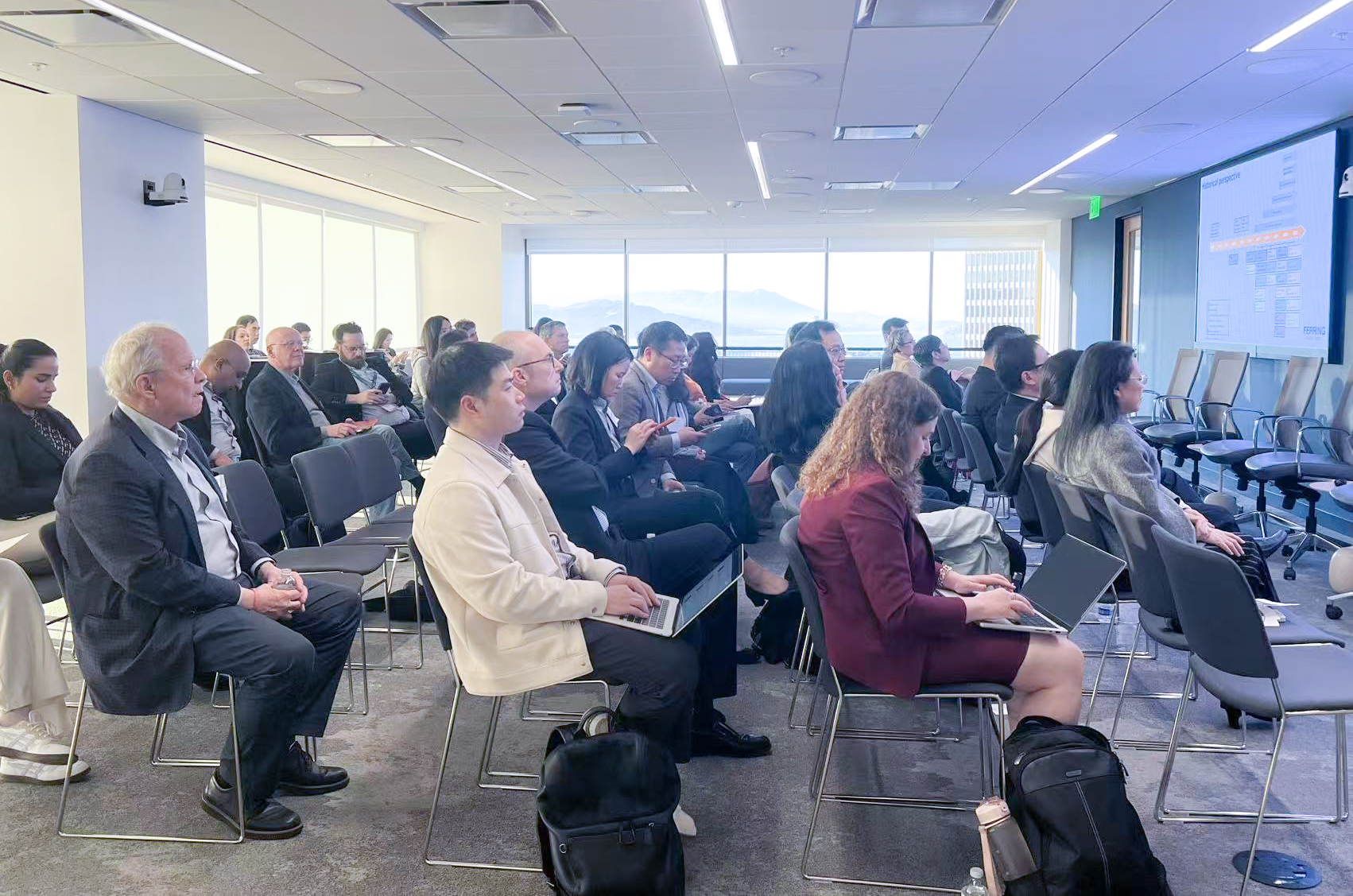
AI-driven Peptide Discovery with End-to-End Lab Integration
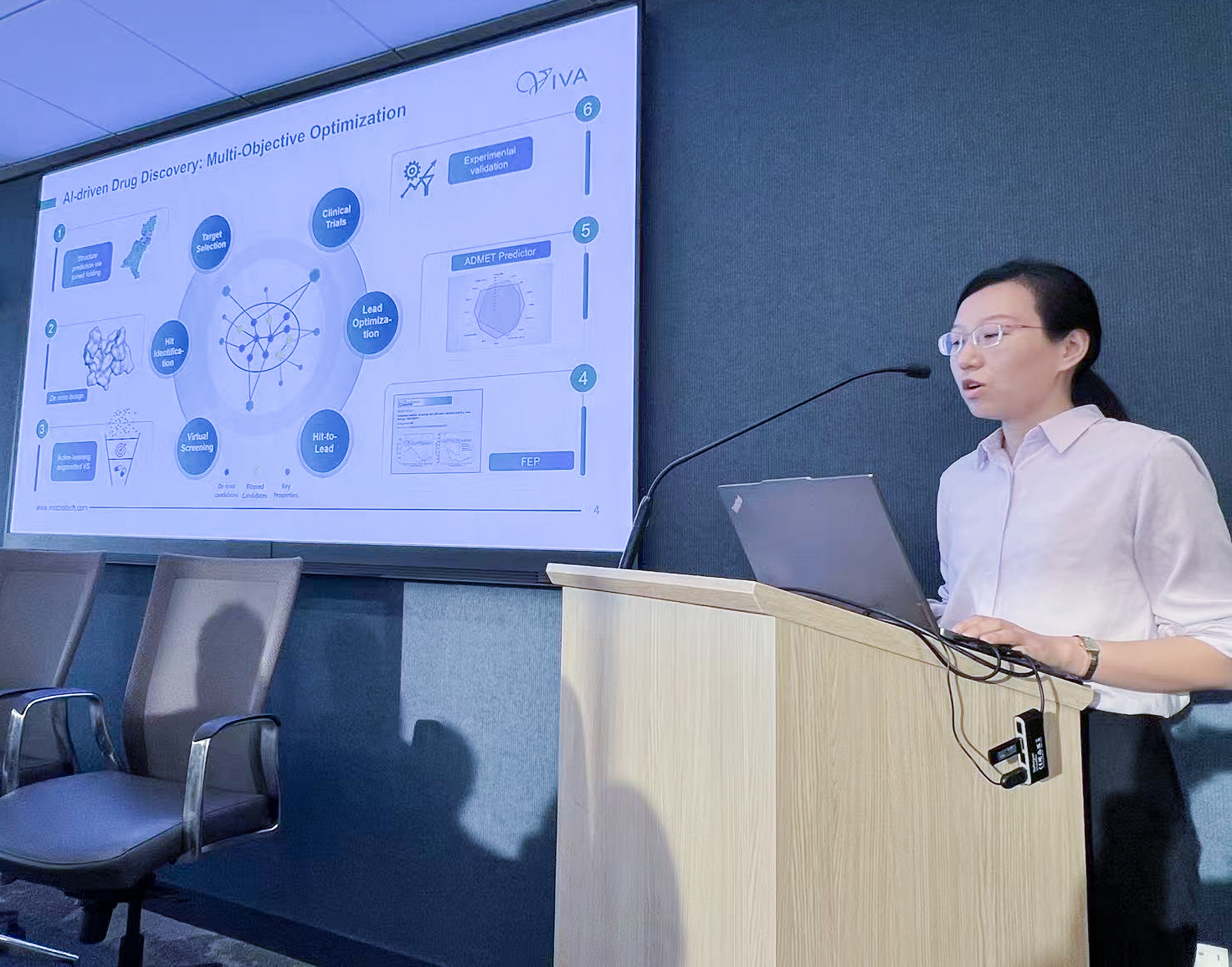
Dr. Yue Qian, Executive Director of the AIDD/CADD Platform at Viva Biotech (Shanghai), shared Viva Biotech's progress in AI-driven peptide discovery and its application across active research programs. Dr. Qian noted that peptides provide distinct advantages for targeting protein–protein interactions (PPIs), but their discovery is constrained by extensive chemical diversity, challenges in conformational characterization, and complex structure–activity relationships (SAR).
To address these challenges, the team has developed peptide-specific computational models with automated model building. Key components include a proprietary non-canonical amino acid (NCAA) database, peptide 3D structure modeling with conformational sampling, and a series of scoring metrics to evaluate key properties such as binding affinity, conformational stability and dynamics, and drug-likeness. An automated peptide parameterization and featurization protocol supports diverse peptide topologies, including cyclic and multicyclic architectures, and enables downstream molecular dynamics (MD) simulations, affinity profiling, and rational peptide optimization.
For ADMET prediction, the team curated on the order of 100,000 peptide-related data points spanning pharmacokinetic, bioactivity, and safety-related properties such as permeability, bioavailability, and toxicity. By combining peptide conformational featurization with tailored feature representations, the resulting models enable high-throughput, multi-parameter optimization at early stages of peptide discovery, while maintaining robust predictive performance and significantly reducing computational cost.
Dr. Qian emphasized that by integrating data, algorithms, and computational power with Viva Biotech's structural biology and wet-lab platforms, the company has established a lab-in-the-loop, closed-loop design–make–test–analyze workflow. This framework connects structure-based computational design with experimental screening, chemical synthesis, and DMPK evaluation, enabling continuous iteration driven by experimental feedback.
In molecular generation and design, Dr. Qian introduced V-SPADE, a multimodal de novo design algorithm featuring all-atom co-folding and co-design, enabling simultaneous structure prediction and molecule generation. For peptide discovery, the approach supports three application scenarios: cyclic peptide design starting from protein–protein interaction (PPI) interfaces, de novo peptide generation guided by binding pockets and epitopes, and computational design guidance for experimental screening platforms such as phage display.
In case studies, computationally generated peptide candidates were validated using SPR and related assays. More than half of the tested peptides maintained or improved binding affinity while also showing improved drug-like profiles, helping shorten experimental cycles and reduce overall R&D cost. Relevant automated tools have been deployed on Viva Biotech's AIDD platform to support continuous design iteration and model refinement across peptide discovery programs.
AI-powered Peptide CRDMO Platform
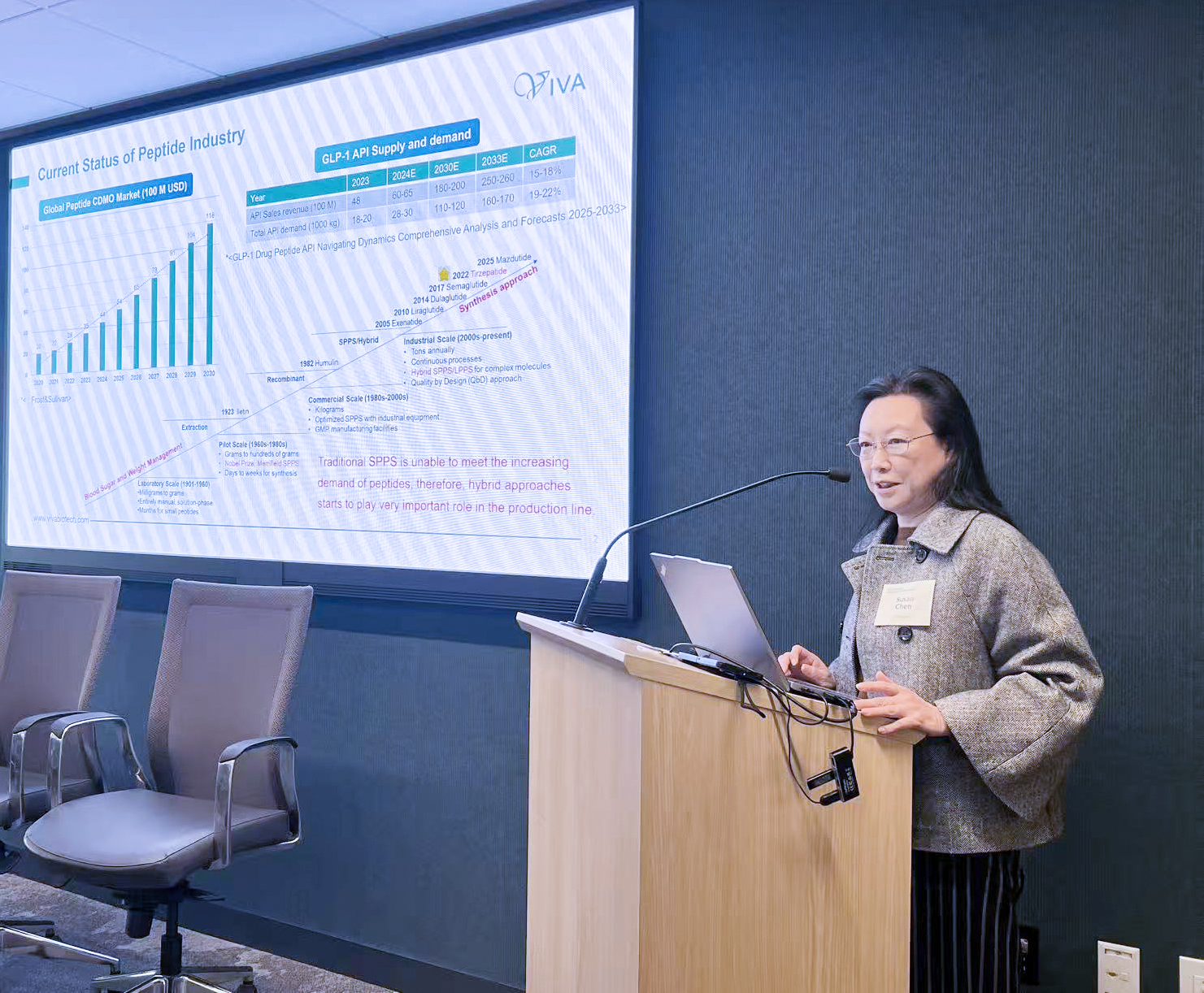
Dr. Lei Chen, Chief Technology Officer of Viva Biotech Group, shared the latest advances in the company's AI-powered peptide CRDMO platform for complex peptide process development and commercial manufacturing. She noted that growing demand for long-chain, multi-modified peptides—exemplified by GLP-1–based drugs—has increasingly exposed the limitations of traditional solid-phase peptide synthesis (SPPS) in capacity, cost, and scalability. As a result, hybrid SPPS/LPPS, fragment-based approaches have emerged as a key route for peptide commercialization.
Dr. Lei Chen emphasized that the key challenges in hybrid peptide synthesis do not lie in individual reaction steps, but in fragment-level decision-making, including fragment cutting strategies, protecting-group selection, impurity risk prediction, fragment crystallization feasibility, and yield performance. Historically, such decisions have been largely experience-driven, limiting process standardization and constraining robustness, reproducibility, and GMP scale-up.
To address these challenges, Viva Biotech has applied AI-based approaches—including Monte Carlo Tree Search (MCTS) combined with graph neural network (GNN) models—to systematically model and optimize fragment cutting and route planning. Building on this foundation, the company has established an AI-enabled process decision framework spanning fragment design through API scale-up. The framework integrates yield prediction, crystallization modeling, orthogonal protecting-group evaluation, and impurity risk identification, guided by a core principle: resolving complexity early in synthesis design rather than relying on downstream purification. This approach enables clearer definition of critical process parameters (CPPs) and improves overall process controllability, robustness, and reproducibility.
Overall, the AI-powered peptide CRDMO approach reduces reliance on highly individualized expertise, delivers approximately 20–30% improvements in development efficiency, and supports tangible progress in API quality control and commercial batch consistency, providing a more systematic pathway for developing and manufacturing complex peptide drugs.
Panel Discussion: AI Meets New Modalities – From Evolution to Revolution in Biotech Business
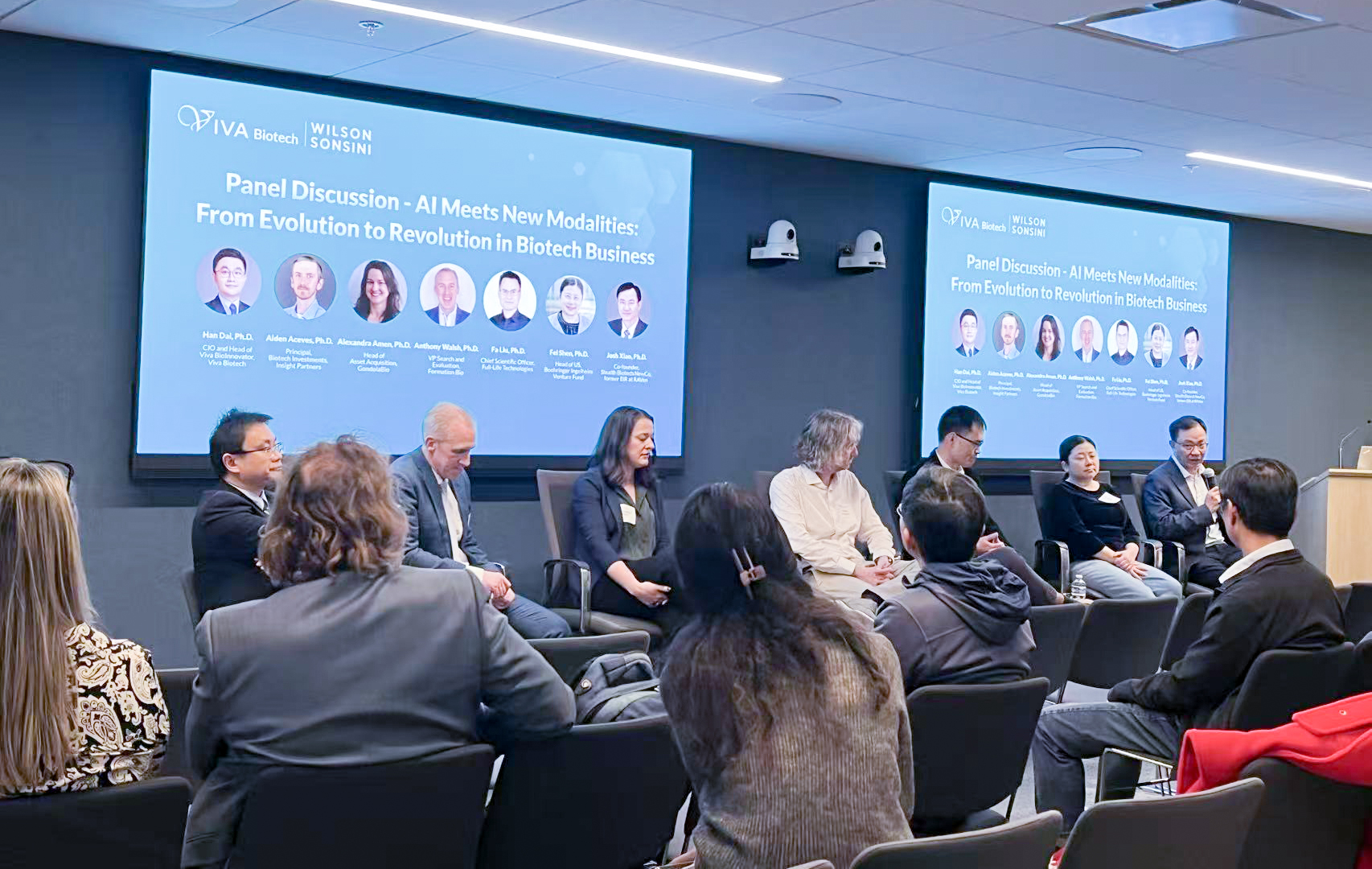
The forum concluded with a panel discussion, “AI Meets New Modalities: From Evolution to Revolution in Biotech Business,” moderated by Dr. Han Dai, Chief Innovation Officer of Viva Biotech Group and Head of Viva BioInnovator. Panelists explored how AI is reshaping team structures, investment decision-making, and external innovation strategies, while accelerating the industry's shift toward increasingly complex drug modalities. The discussion highlighted peptides as a compelling example of this transition, underscored the growing importance of high-quality proprietary data and closed-loop R&D workflows, and identified emerging AI-enabled trends that are expected to play a transformative role in drug discovery and development over the next three to five years.
Viva Biotech will continue to expand the role of AI across critical decisions from discovery through manufacturing, aligning technological innovation with operational execution to accelerate R&D and deliver consistent, high-quality solutions for partners.