
Online Message
After receiving your message, our professional team will contact you shortly.


The structure can determine the functions, and accurate analysis of structural information can provide important basic biological information for the development of new drugs. In terms of structural biology services, Viva has built the protein structure research platform with full advantages and the unique cryo-electron microscopy (cryo-EM) technology platform, which can provide global partners with high-resolution, high-end and all-round protein structure determination services. In addition, the process of protein structure analysis cannot be separated from the support of protein purification and expression. Viva has a complete protein expression system and sufficient technical accumulation to ensure the stability and uniformity of protein samples from the source and provide a solid foundation for the structural analysis of drug target proteins.
Viva has established the world's largest protein structure research platform, providing high quality protein and structural biology services to global customers. About 16000 crystal structures are determined every year, with a high success rate and a maximum resolution of 0.7Å.
· A large number of high purity samples are required for crystallization
· Due to complexity of crystallization, a large number of screening is needed
· Structure of protein under crystallization condition
· Single structure in general
· Suitable for analysis of small and medium molecular weight proteins
· Mature technology, low cost
· High throughput structural analysis
· Numerous synchrotron beamlines
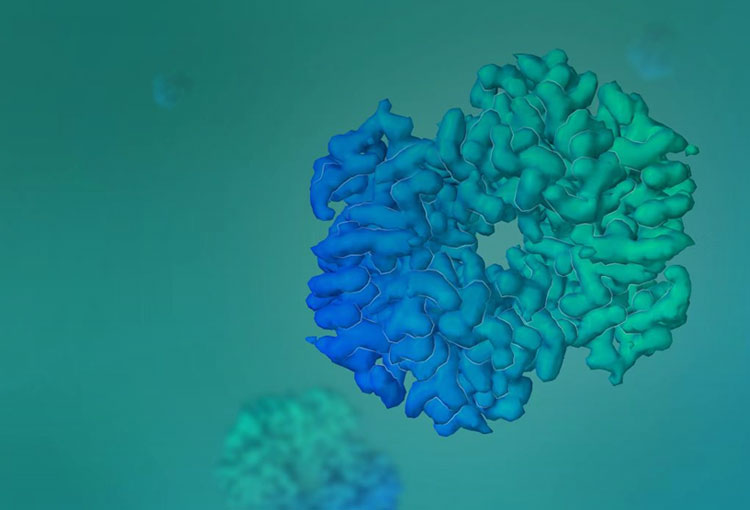
Currently Viva cryo-EM platform harbors Talos 120kV microscope, Glacios 200kV microscope equipped with Falcon4, sample vitrification equipment Vitrobot and high performance computing clusters. Viva Biotech provides world-leading Structure-Based Drug Discovery (SBDD) services including plasmid construction, protein expression and purification, negative stain, cryo screening, data collection, 3D reconstruction, and model building. The full gene-to-protein service pipeline is well established to support a full range of projects from gene to drug discovery.
· Minute quantities of sample and low purity requirements
· Intuitive results and convenient sample optimization
· Protein structure in near natural state
· Different conformations and dynamic information of proteins available
· Suitable for analyzing larger molecular weight proteins (>60kD)
· Ideal for structural analysis of membrane protein and big protein complexes
We provide all the types of technologies to support your structure studies, including X-ray crystallography, cryo-EM, NMR, MicroED, and SAXS, and we can provide tailored recommendation for your specific needs.
— small molecules, high-resolution ligand binding (up to 0.7 Å), fragment screening
— large complexes, membrane proteins, PROTAC ternary complexes (2.0–3.5 Å)
— targets that yield only microcrystals
— solution-state dynamics, isotope-labeled proteins (¹⁵N, ¹³C, ²H)
— particle shape, oligomeric state, and overall structural envelope.
Generally guided by target size and behavior:
—Smaller, well-behaved, stable domains/proteins/complexes
—High-resolution ligand density needed for SBDD
—Larger or conformationally heterogeneous assemblies, membrane proteins, and complexes, i.e. GPCR-G protein complexes.
We assess this case-by-case and can run parallel tracks for high-priority targets.
At Viva Biotech, AI and structural biology operate as a fully integrated dry-wet lab loop. Structural data from X-ray crystallography and Cryo-EM feeds directly into our proprietary AIDD/CADD platform — covering virtual screening, FEP calculations, and molecular dynamics simulations — to guide compound design. Newly synthesized compounds are then rapidly validated through co-crystal structure determination, enabling faster and more rational lead optimization cycles.
Computational modeling also supports protein engineering by predicting thermostabilizing mutations and identifying flexible or disordered regions to enable more effective construct design. In turn, experimentally determined structures continuously refine AI models, creating a closed-loop workflow that accelerates both protein engineering and drug discovery at Viva.
Viva Biotech's protein crystallography services provide atomic-resolution structures of protein–ligand complexes through co-crystallization and crystal soaking, revealing exact binding modes, key interactions, and allosteric sites that directly inform compound optimization.
With approximately 16,000 crystal structures determined annually and access to 13 synchrotron radiation facilities worldwide, structural insights can be rapidly integrated into AIDD/CADD-guided design and medicinal chemistry cycles.
Yes.
This is a core service area. For low-yield or unstable targets we often combine construct engineering, complex formation with binding partners/fragments to stabilize conformation, and iterative small-scale crystallization/grid trials to conserve material before scaling.