


For recombinant protein expression in prokaryotes, E. coli has long been the go-to workhorse. It is easy to handle and delivers fast turnaround for early-stage R&D.
But when your projects step into high-value scenarios — IVD raw materials, biopharma starting materials, food-grade enzymes — the inherent limitations of E. coli often become a major roadblock during scale-up and regulatory preparation.
Many teams hit bottlenecks not because of flawed protocols, but because the host chassis is fundamentally mismatched. Even after countless rounds of optimization, old pain points persist: cumbersome periplasmic extraction, incomplete signal-peptide cleavage, low and unstable yields, and endless battles with endotoxin. These drain your budget, manpower, and precious timeline.
To tackle these two core challenges, our Bacillus subtilis protein expression platform breaks the shackles of E. coli, with two standout strengths:
• Robust extracellular secretion system | Streamlines purification and boosts yield
• Naturally endotoxin-free GRAS chassis | Works for both intracellular and secreted proteins, meeting strict compliance requirements
In this article, we walk through the core rationale for strain selection, compare Bacillus subtilis with E. coli, and share three real project cases to demonstrate how this system delivers tangible value.
Why rethink E. coli? Built-in drawbacks that process optimization cannot fully fix
Two independent dimensions should be distinguished in protein development: purification processes and strain compliance attributes, which are not mutually bound. This is the key reason many projects switch to the Bacillus subtilis system.
As a Gram-negative bacterium, E. coli carries structural limitations rooted in LPS. No amount of downstream polishing can erase these completely, and issues tend to blow up when moving from lab scale to pilot batches and filing. Small-scale success often fails to translate:
1. Periplasmic trapping = lengthy workflows & unavoidable yield loss Nanobodies and many functional enzymes commonly get trapped in the periplasm rather than released into supernatant. Standard workflows require osmotic shock extraction, multi-step chromatography, and repeated polishing. Every extra unit operation raises risks: co-eluting impurities, activity loss, batch variation, and project delays.
2. Endotoxin risk is intrinsic Whether expressed intracellularly or in the periplasm, LPS contamination is always a concern. For IVD, medical, and food applications, dedicated endotoxin-removal steps and heavy QC are mandatory. This adds cost and lead time. Worse, de-tox treatment can damage protein activity and cause unstable quality metrics — a hidden risk for commercialization.
Bacillus subtilis, by contrast, is a GRAS Gram-positive host with no LPS. It eliminates these structural flaws at the source, balancing manufacturability and regulatory readiness.
1. Controlled secretion bypasses periplasm bottlenecks For nanobodies and diagnostic enzymes prone to periplasmic retention, our curated signal-peptide library and expression tuning drive efficient secretion into fermentation supernatant. No cell lysis, no periplasmic extraction, fewer polishing steps. Purification is shorter and cheaper, and risks of degradation, activity drop, and purity drift are greatly reduced — with more consistent yield and purity.
2. Endotoxin-free by nature, for all expression modes This is an intrinsic property of the strain, regardless of intracellular or secretory expression. You skip burdensome de-tox steps, along with the associated product loss and activity impairment. The final material inherently meets strict requirements for IVD, biopharma, and food enzymes, lowering filing risk and accelerating your path to market.
In short: secretion simplifies production for higher yield and lower cost; the endotoxin-free chassis de-risks compliance and speeds regulatory preparation. These two advantages work independently, flexibly supporting diverse prokaryotic protein projects.
Who should consider the Bacillus subtilis platform?
This system is worth evaluating if you are facing:
• Nanobodies / secretory proteins: tough periplasmic extraction, high purification cost, poor scale-up yield
• Diagnostic enzymes: unstable activity, stubborn impurities, heavy endotoxin QC burden
• IVD & medical recombinant proteins: tight specs on endotoxin levels and purity
• Food-grade & industrial enzymes: demand for a safe, non-toxic expression host
• Intracellular targets: want to cut out de-tox steps, reduce product loss, and stabilize quality
Our end-to-end Bacillus subtilis CRO service
Target proteins vary greatly in expression properties, so suitable expression systems must be assessed against protein characteristics and practical application requirements. Addressing two major industry pain points — cumbersome purification for secreted proteins and heavy compliance pressure for intracellular proteins — we deliver full cycle services to support high end recombinant protein projects and accelerate pipeline commercialization:
1. Custom strain & vector engineering: combinatorial screening of strains, promoters, and signal peptides for intracellular or secretory expression
2. Protein production: fermentation from 10 mL up to 100 L, delivering high-activity, high-purity, endotoxin-free material
3. Complete documentation package: raw lab records, process SOPs, and QC reports ready for R&D handover and regulatory support
Case Highlights: How Bacillus subtilis solves real-world problems
Case 1 — Nanobody production: simpler purification with reliable yield
Four structural biology nanobodies were benchmarked.
• E. coli: yields scattered widely from 0.1–19.85 mg/L; some clones barely expressed. Laborious periplasmic extraction was required before purification.
• Bacillus subtilis: all four nanobodies achieved robust secretion, with yields >10 mg/L with far less variability. >95% purity was achieved with just two purification stages (Ni capture + SEC polishing), cutting downstream workload dramatically.
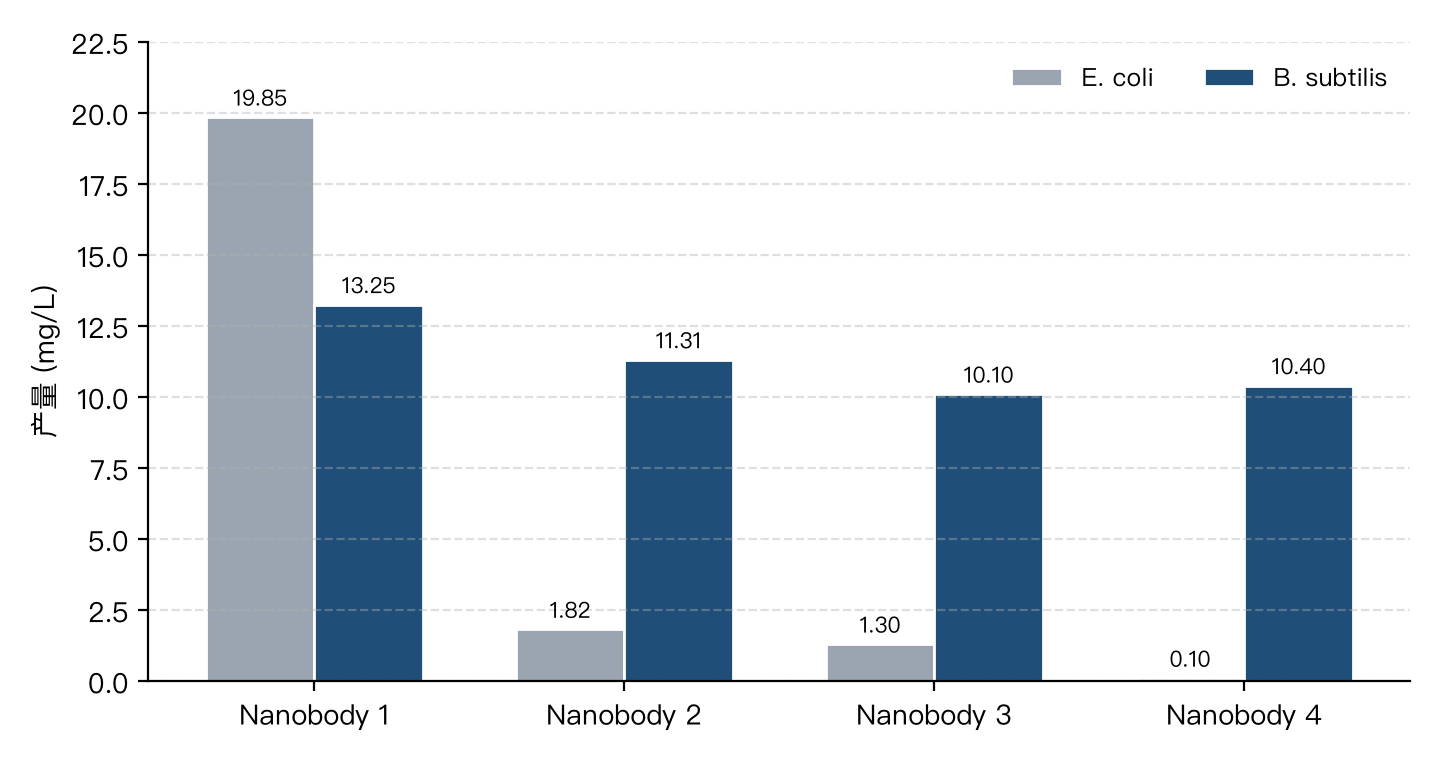
Figure 1. Volumetric yield comparison (mg/L): E. coli vs. Bacillus subtilis for four nanobodies
(Source: This study)
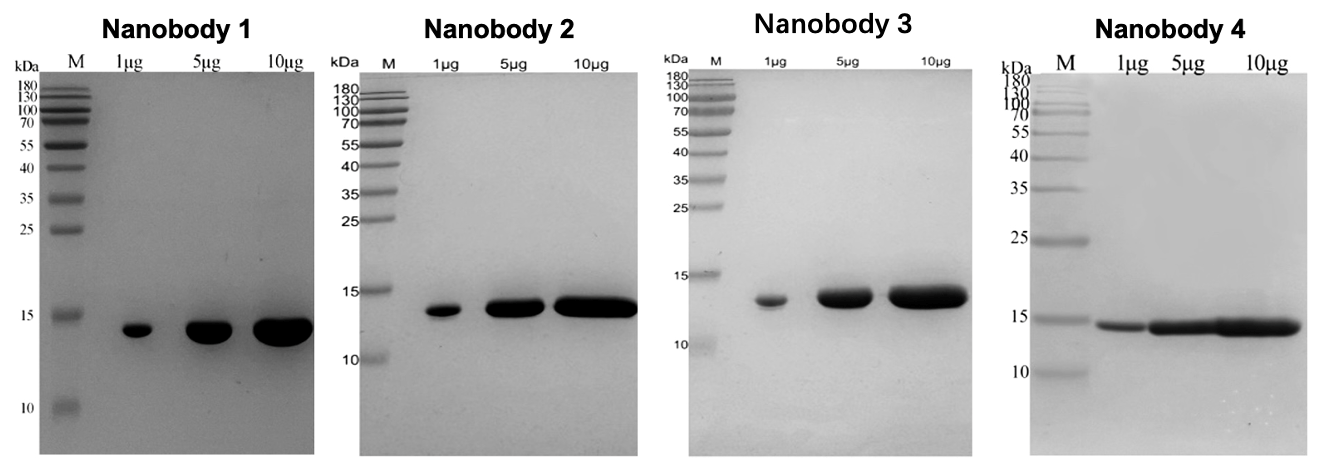
Figure 2. Purity profile of nanobodies purified from Bacillus subtilis
(Source: This study)
Case 2 — Low-endotoxin TEV protease
TEV protease is a staple tag-removal tool enzyme.
Traditional E. coli-produced TEV comes with host-derived endotoxin. Extra clearance steps make the process long and endotoxin levels hard to lock down.
Expressed in Bacillus subtilis, TEV is endotoxin-free from the start. No extra de-tox needed. Final product routinely hits <0.1 EU/mg with excellent batch consistency.
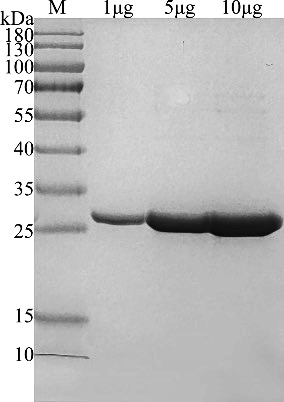
Figure 3. Purity profile of recombinant TEV protease from Bacillus subtilis
(Source: This study)
Case 3 — PTPS secreted protein: remove signal-peptide impurities, massive shake-flask yield gain
Secreted proteins expressed in E. coli are mostly transported to the periplasm. Poor protein folding leads to failed translocation and intracellular retention. Periplasmic extraction frequently causes membrane leakage of intracellular host proteins. Intracellularly retained target proteins carry unremoved signal peptides, which are difficult to eliminate in downstream purification.
PTPS is a high affinity inorganic phosphate (Pi) binding protein widely applied in bioassays and environmental remediation, conventionally prepared via E. coli periplasmic extraction. Bacillus subtilis secretes PTPS directly into extracellular culture medium, fundamentally eliminating signal peptide containing impurities. Purification workflows are simplified, and shake flask yields improve by orders of magnitude.
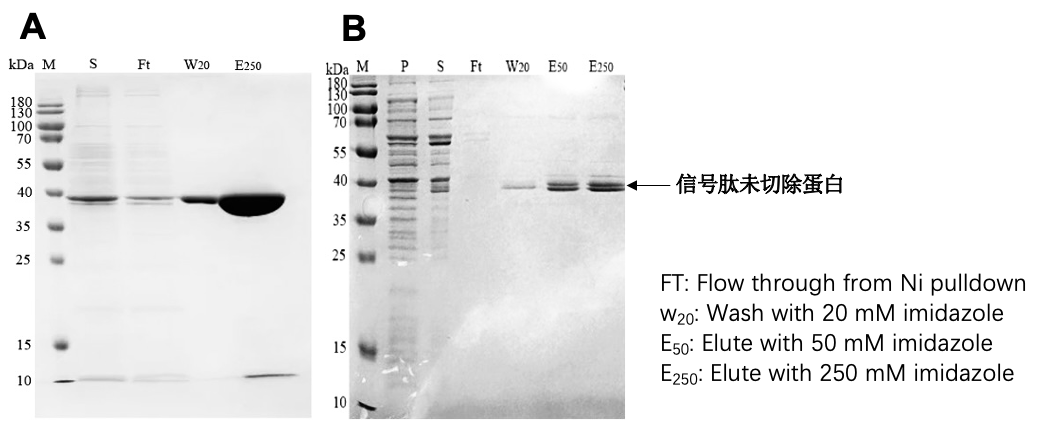
Figure 4. Ni affinity chromatogram.
A: Bacillus subtilis culture supernatant; B: E. coli periplasmic extract (arrow: uncleaved signal-peptide impurity band). FT: flow-through; W20: 20 mM imidazole wash; E50: 50 mM imidazole elution; E250: 250 mM imidazole elution.
(Source: This study)
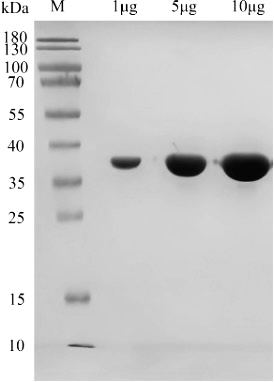
Figure 5. Purity profile of recombinant PTPS from Bacillus subtilis
(Source: This study)
If you are exploring recombinant protein expression for your pipeline, get in touch with our team. Email us at info@vivabiotech.com to discuss your project.