



Imagine spending months optimizing an ADC, glycoprotein, membrane protein, or RNA therapeutic—only to discover that the molecular weight you've been relying on isn't correct.
For decades, size-exclusion chromatography (SEC) has been one of the most widely used tools for assessing protein purity and size. However, many next-generation therapeutic modalities no longer behave like the globular proteins that traditional SEC was designed to analyze. ADCs, glycoproteins, membrane proteins, nucleic acid therapeutics, protein–nucleic acid complexes, and PROTACs often exhibit unusual shapes, heterogeneous compositions, or large hydration shells, whose molecular-weight estimates based solely on retention volume can be misleading and may result in incorrect conclusions regarding oligomerization, aggregation, or sample quality.
This is where SEC-MALS (Size-Exclusion Chromatography coupled with Multi-Angle Light Scattering) makes a difference, which directly measures absolute molecular weight to obtain:
• Absolute molecular weight (Mw)
• Sample homogeneity (Mw/Mn)
• Radius of gyration (Rg)
• Aggregation levels
• Conjugation ratios and stoichiometry
01 | When Should You Use SEC-MALS?
The decision is straightforward: the more structurally 'atypical' your molecule, the more indispensable SEC-MALS becomes.
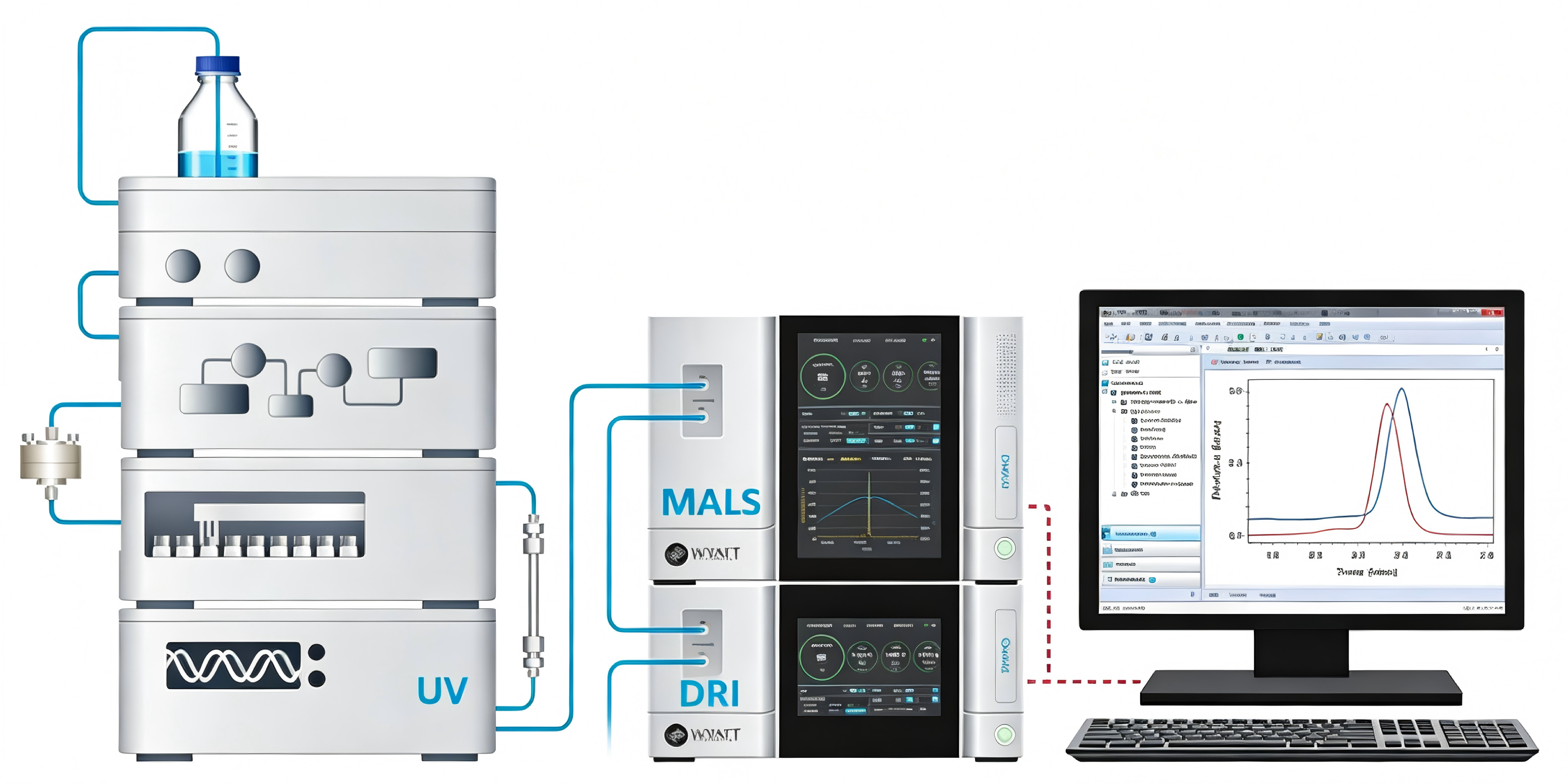
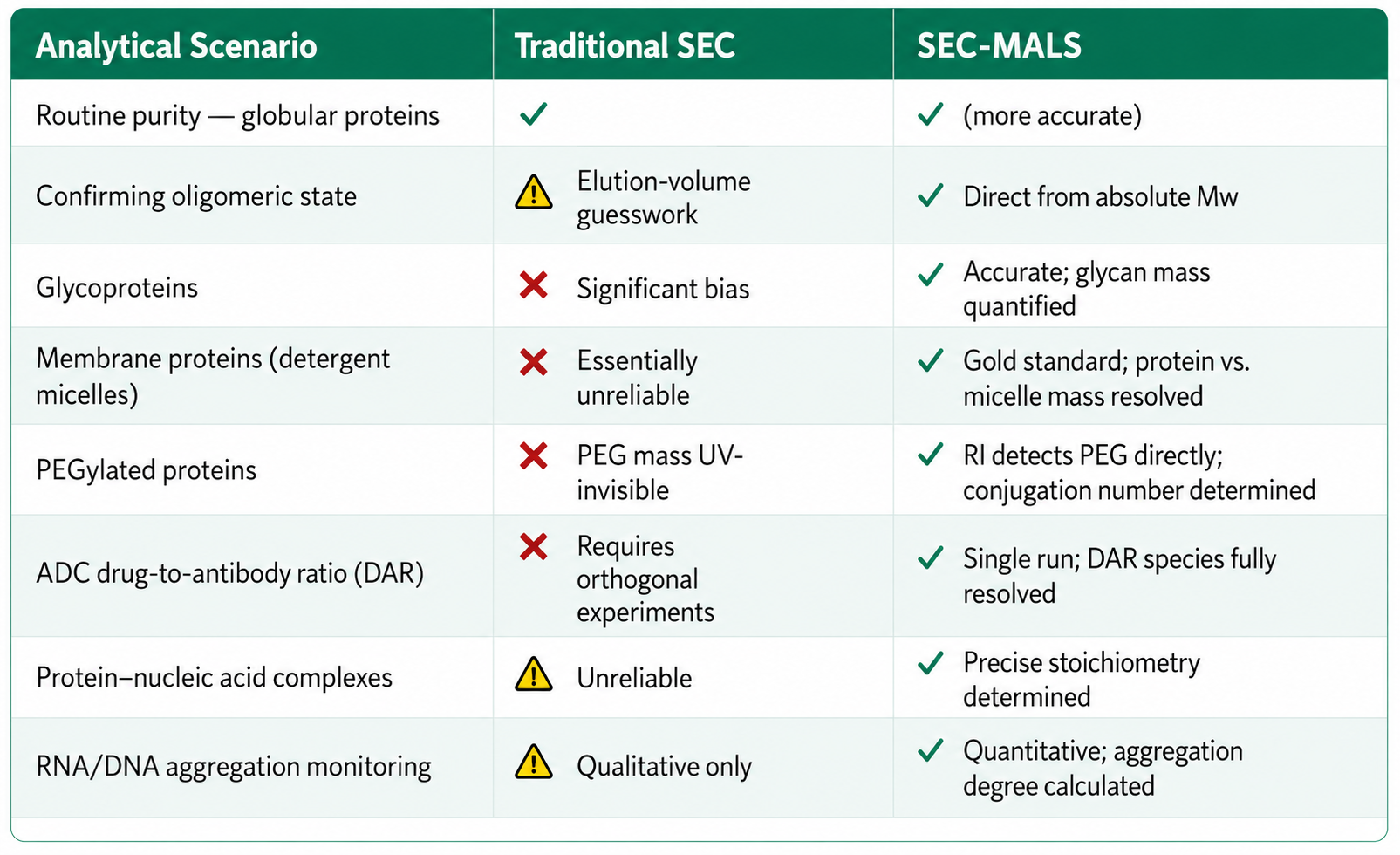
SEC-MALS can be the only way to get a trustworthy answer.
02 | Real-World Cases: What Problems Does SEC-MALS Actually Solve?
Case 1: Glycoproteins: Is It Homogenous or Not?
The challenge:
A glycosylated protein showed a broad, smeared band spanning 30–55 kDa — far above the theoretical Mw of 21.96 kDa. Neither conventional SEC nor LC-MS could determine the true molecular weight. Was the sample a glycosylated monomer? A mixture of monomer and dimer?
The SEC-MALS answer:
• Sample confirmed homogeneous: absolute Mw at the main peak = 42.96 kDa, with Mw/Mn < 1.05 — a tight, uniform population meeting the quality bar for X-ray crystallography.
• Glycosylation quantified: UV/RI dual-channel deconvolution precisely resolved protein mass (21.31 kDa) from glycan mass (21.65 kDa). The apparent weight discrepancy was entirely explained by glycosylation — the protein itself was a clean monomer.
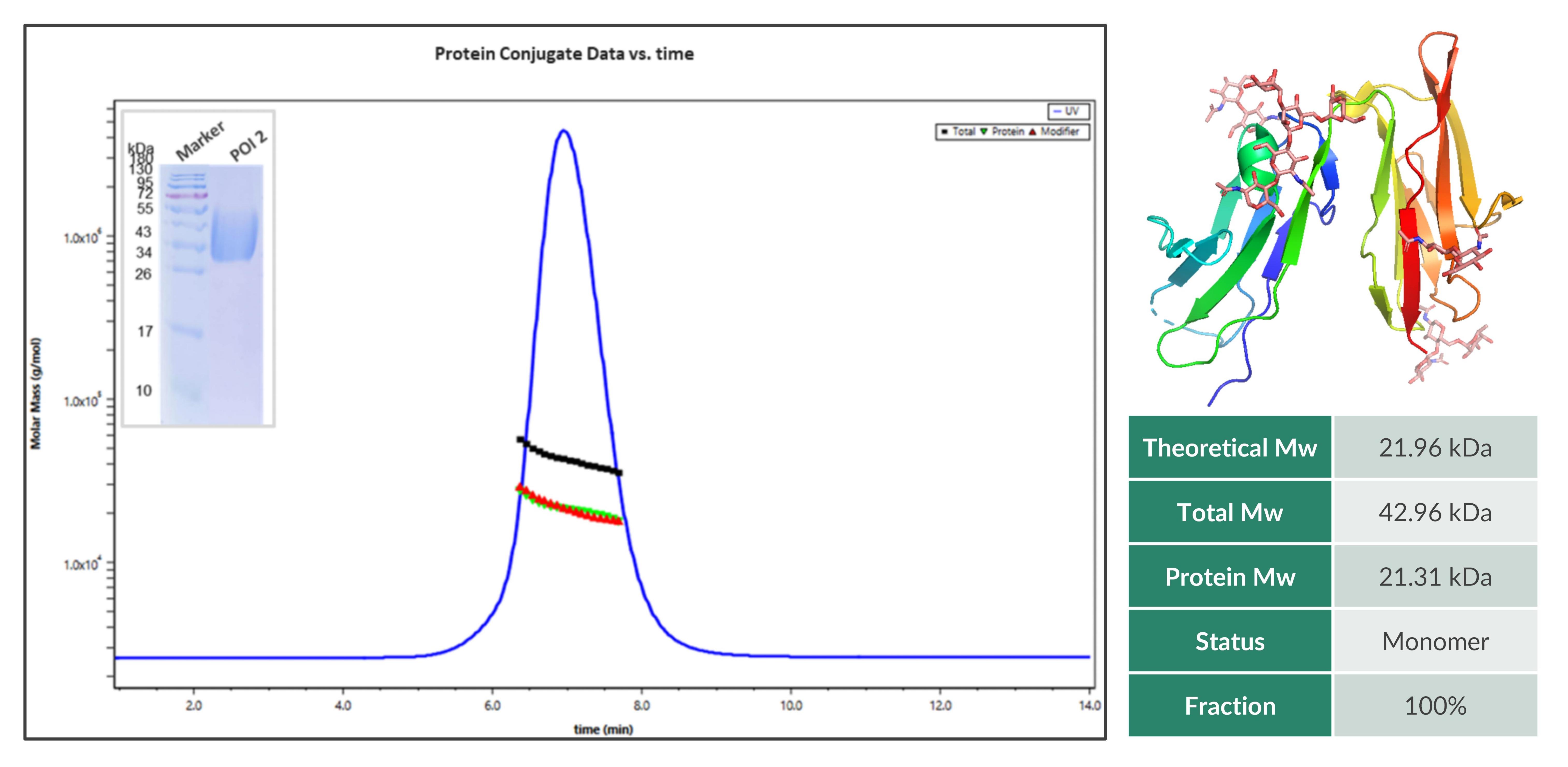
Result: One SEC-MALS run resolved a question that SDS-PAGE, SEC, and LC-MS had collectively failed to answer.
Case 2: Detergent-Solubilized Membrane Protein: Separating Signal from Noise
The challenge:
A purified membrane protein eluted exceeding its predicted Mw of 64.4 kDa. Mass spectrometry was ruled out due to the presence of detergent. The team couldn't determine the protein's oligomeric state or confirm sample homogeneity for a cryo-EM campaign.
The SEC-MALS answer:
• Complex confirmed homogeneous: absolute Mw of the intact detergent–protein complex = 209.7 kDa, with Mw/Mn < 1.05.
• Protein and micelle deconvoluted: UV/RI deconvolution resolved the membrane protein (64.03 kDa) from the detergent micelle (145.67 kDa) — unambiguously identifying the protein as a monomer within a single micelle.
• Cryo-EM readiness confirmed: the protein met the quality and homogeneity requirements for high-resolution structural studies.
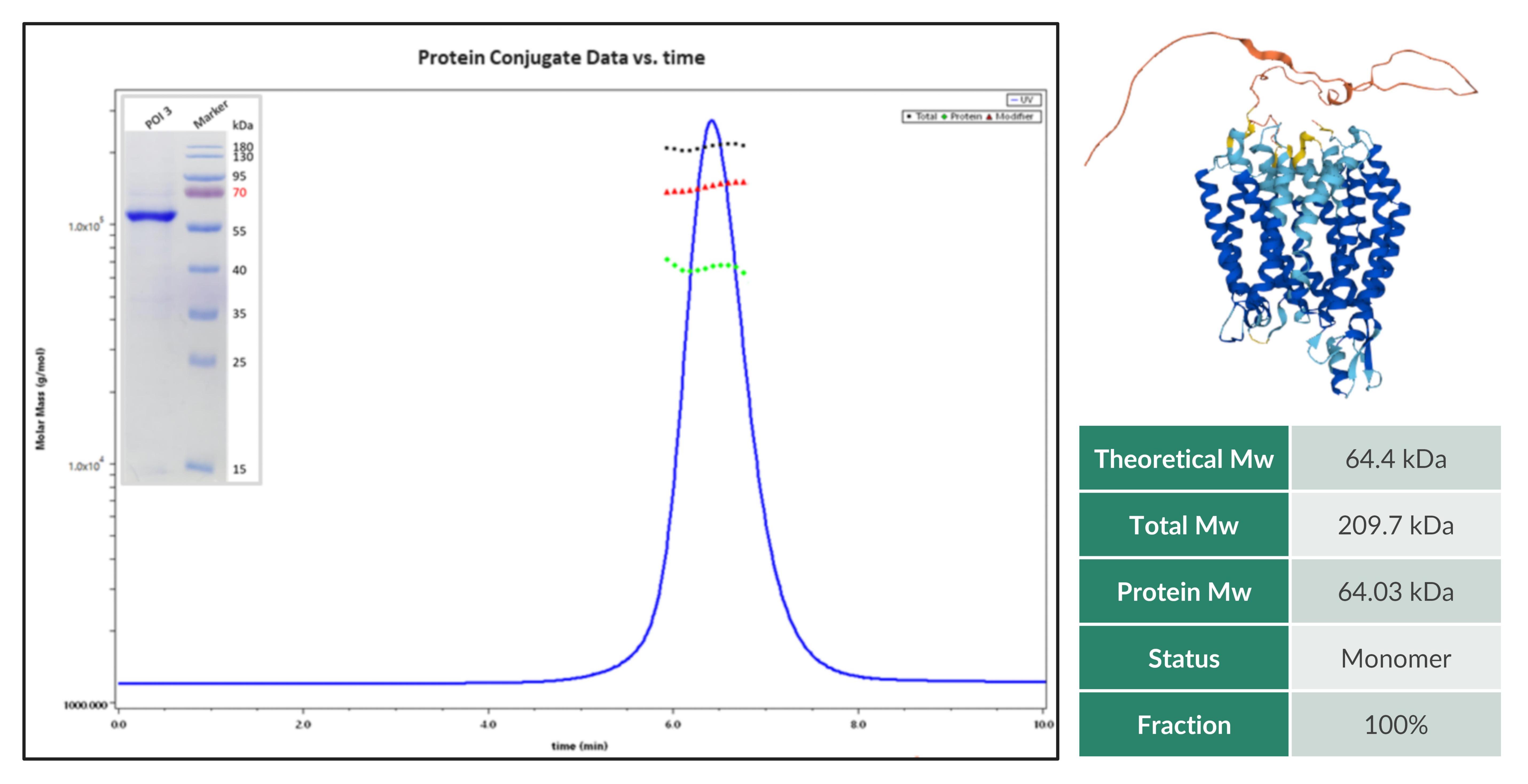
Result: No other technique could have delivered this answer in a detergent-containing buffer. SEC-MALS is the only viable path for membrane protein absolute characterization.
Case 3: RNA Aggregation: Finding Out Why Your Binding Experiment Doesn't Work
The challenge:
A team studying the interaction between an RNA molecule and a target protein couldn't obtain reliable binding data. The conventional SEC is poorly suited to RNA characterization.
The SEC-MALS answer:
• Aggregation state mapped precisely: absolute Mw and Mw/Mn measured for every eluting species, providing a complete picture of the aggregation landscape.
• Root cause identified: by systematically varying concentration and incubation time, the team pinpointed how each parameter drove aggregation.
• Optimized conditions established: the data defined the optimal concentration range, time window, and buffer composition to minimize aggregation — enabling the downstream binding experiments to proceed reliably.
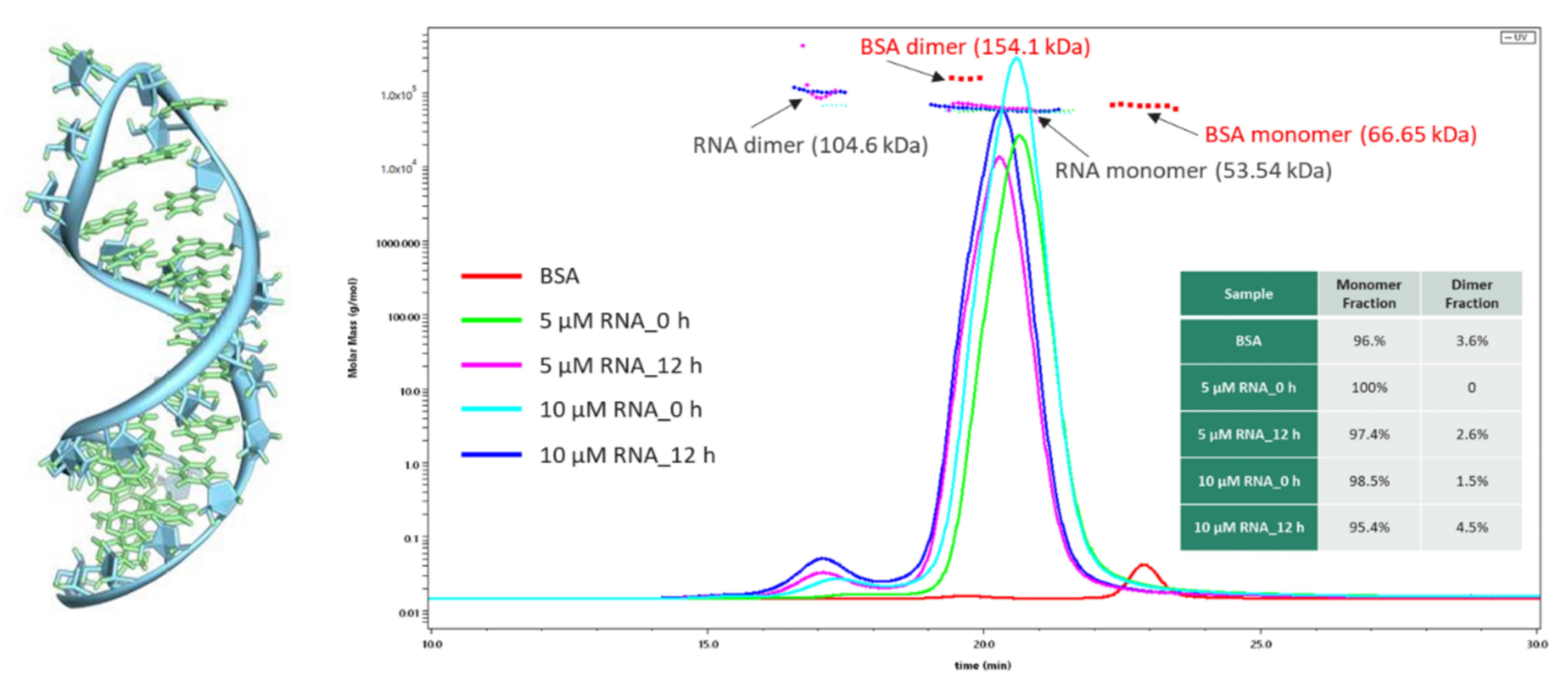
Result: SEC-MALS turned a frustrating dead end into a clear path forward — by diagnosing the sample quality problem first.
Additional Applications
Beyond the examples above, SEC-MALS plays an important role in characterizations of other molecule types, including PEGylated proteins, drug-to-antibody ratio (DAR) for ADCs, protein–nucleic acid complexes, etc.
03 | Why Choose Viva Biotech for SEC-MALS Studies
Successful SEC-MALS studies require more than advanced instrumentation but depend on expertise in sample preparation, method development, and data interpretation.
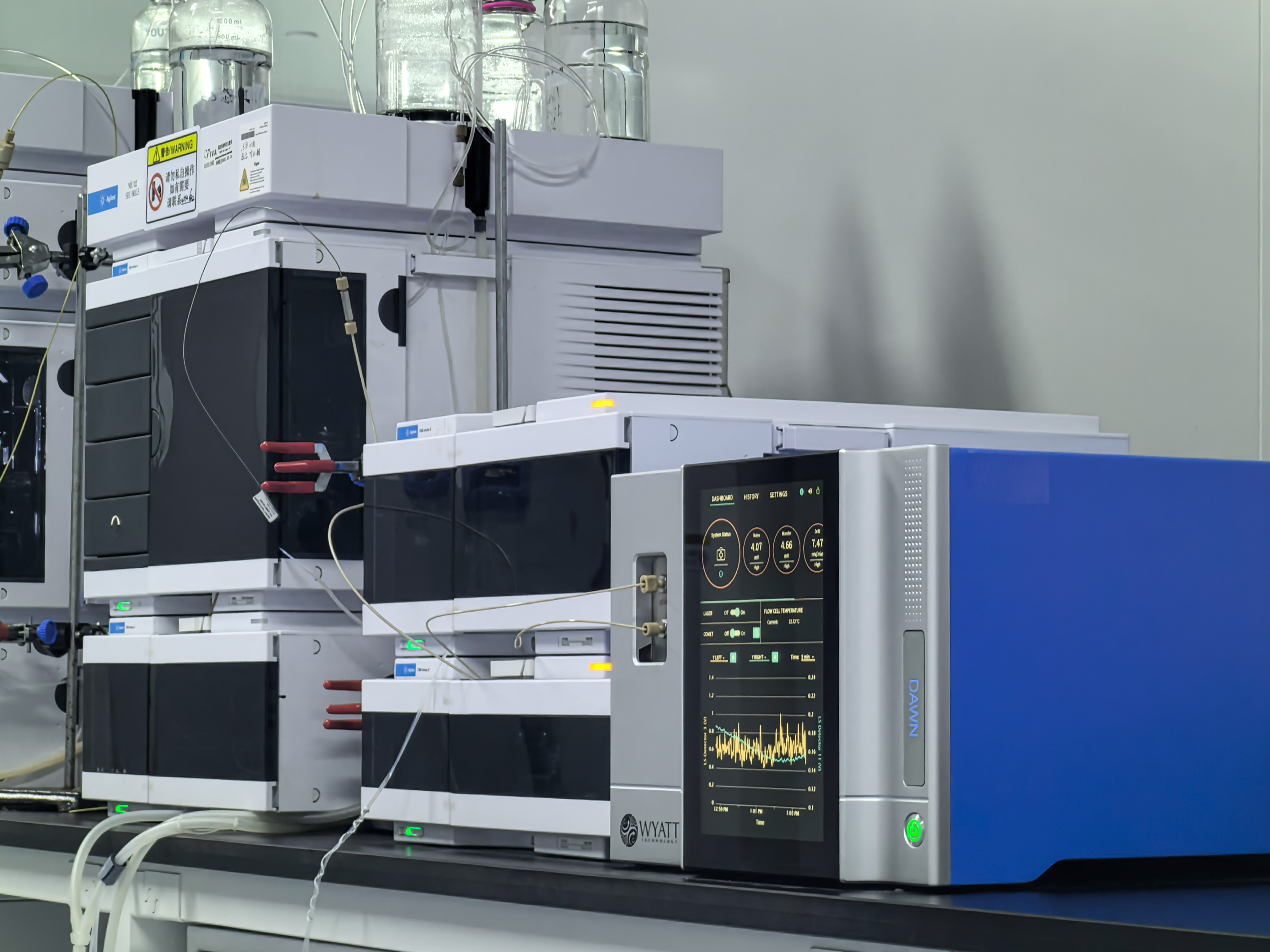
Method Expertise — Leave the Complexity of MALS to Us
With years of extensive experience with more than 3,000 samples characterized, spanning membrane proteins, glycoproteins, antibodies, PROTACs, nucleic acids, and nucleic acid–protein complexes, our team has developed standardized workflows for dn/dc selection, mobile phase compatibility, and sample concentration optimization. Detection and analysis can typically be completed within 1 – 2 business days.
More Than a Standalone Analytical Service
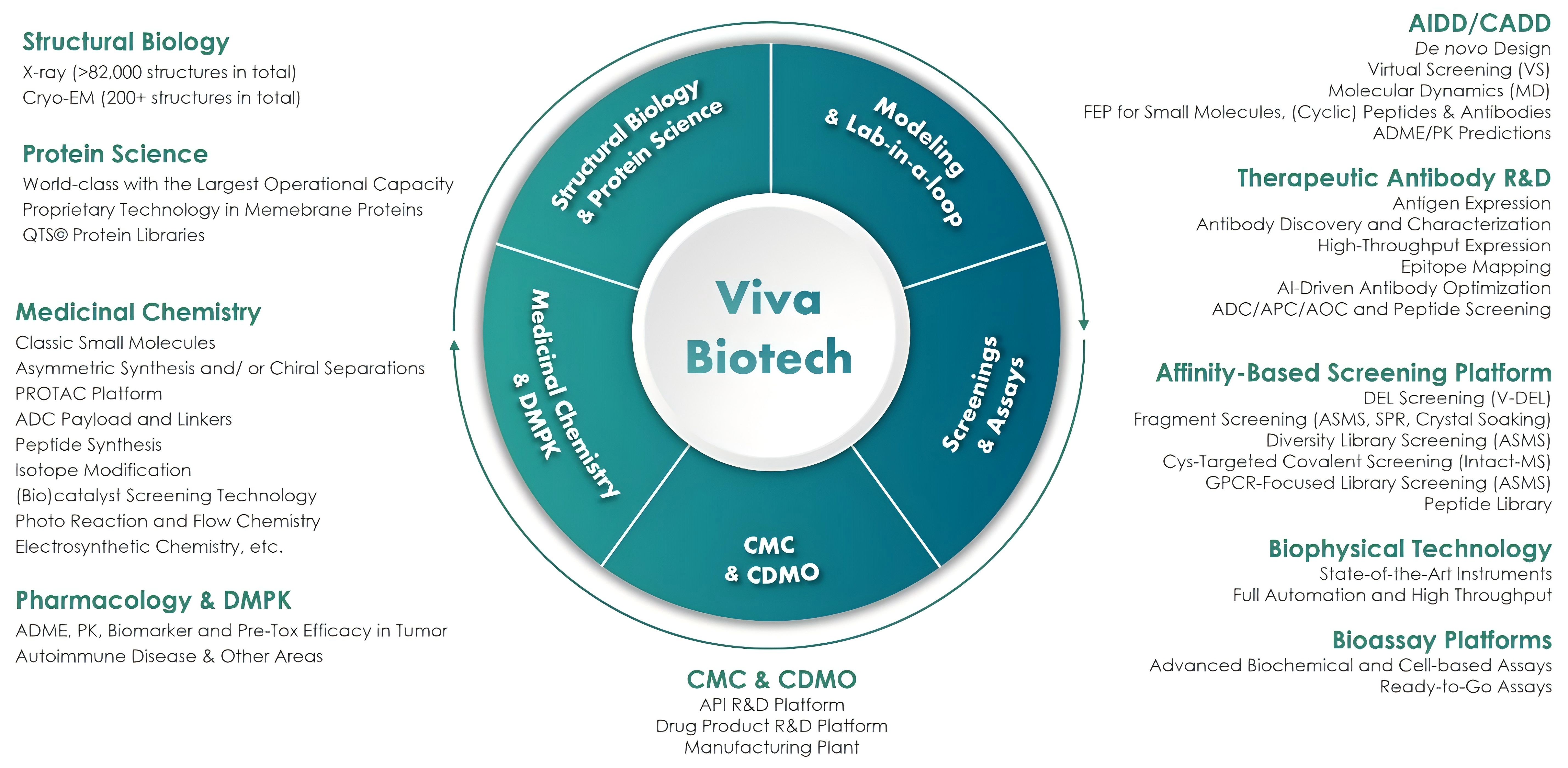
Unlike standalone analytical laboratories or CROs, Viva Biotech integrates SEC-MALS within a broader drug discovery and development ecosystem.
Our platform spans:
· Protein production and purification
· Structural biology (X-ray crystallography and Cryo-EM)
· Biophysical characterization (SPR, HDX-MS, ASMS)
The integrated, comprehensive platform for protein studies enables characterization results to translate directly into actionable scientific decisions.
Interested in SEC-MALS services for your project?
Get in touch with our expert team: info@vivabiotech.com
References & Further Reading
• Technology Networks: https://www.technologynetworks.com/tn/
• Nature Reviews Methods Primers. Size-exclusion chromatography with multi-angle static light scattering. 2025. 5, Article 40.
• Institute for Protein Design: https://www.ipd.uw.edu